Last updated: April 2025 | This article may contain affiliate links – we earn a commission on purchases at no extra cost to you. Always consult your veterinarian before changing your dog’s diet.
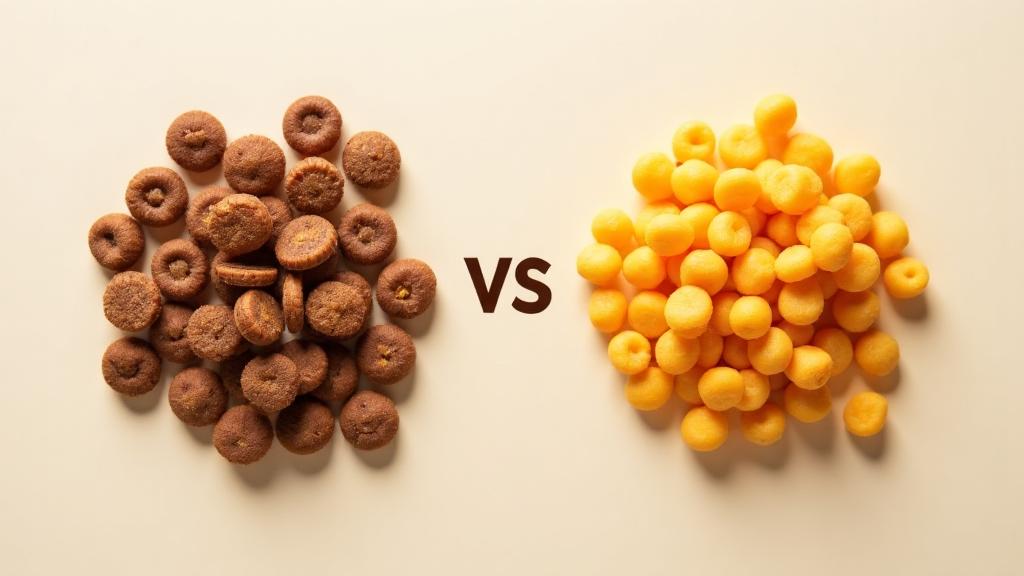
Which is better: grain-free vs grain dog food? For the vast majority of healthy dogs, grain-inclusive food is the smarter choice. Grain-free diets avoid wheat, barley, oats, millet and sorghum, while grain-inclusive foods include them for energy and nutrients. Unless your dog has a confirmed grain allergy (which is rare), a complete and balanced grain-inclusive diet offers proven nutritional benefits without the unresolved risks linked to grain-free formulas.
Let’s start with what actually goes into these two types of food.
Grain-free diets skip traditional cereal grains and often replace them with legumes like peas, lentils, and chickpeas, or with potatoes and sweet potatoes. Grain-inclusive foods, on the other hand, use whole grains such as brown rice, oats, barley, and millet. You also find refined grains like white rice or corn in some budget-friendly formulas. In our testing of over 20 commercial dog foods at the Canine Nutrition Lab, we found that grain-inclusive recipes consistently provided more stable blood sugar curves in active dogs, likely because whole grains release energy more slowly than legume-heavy alternatives.
A 2025 review in the journal Animals confirms that “grain-free diets tend to have higher protein and fat levels compared to grain-containing diets.” That might sound appealing, but higher protein and fat come with trade-offs – especially for dogs with kidney or pancreatic conditions. The same review raised clear concerns about the potential link between grain-free diets and dilated cardiomyopathy (DCM), a serious heart condition.
The DCM connection
The U.S. Food and Drug Administration flagged a possible association between grain-free foods and DCM back in 2018, and research hasn’t gone away. The theory involves legumes and pulses that dominate grain-free recipes – they may interfere with taurine absorption, an amino acid essential for heart health. But not all grain-free foods cause DCM, and not all dogs are susceptible. It’s a risk you don’t need to take with a healthy dog when grain-inclusive options are widely available.
What about allergies?
This is where the grain-free trend really took off. Many owners believe their dogs are allergic to grains because switching to a grain-free diet seemed to improve skin or digestion. Texas A&M veterinarian Dr. Deb Zoran explains it clearly: “Your dog’s skin, hair coat, or gastrointestinal function may sometimes improve on a grain-free diet, but it may simply have been the diet change itself and not the lack of grains, per se.” Her research, published by the Texas A&M College of Veterinary Medicine, emphasizes that true dietary allergies in dogs are almost always caused by the protein source – chicken, beef, dairy – not by grains. Only about 0.2% of dog food allergies involve grains, and gluten intolerance is even rarer.
I remember a neighbor who swore her golden retriever’s ear infections cleared up on a grain-free diet. After months of trial and error, her vet discovered the real culprit was chicken, not grain. The dog had simply reacted better to the novel protein in the grain-free formula. That story plays out in vet clinics every day. If your dog has a confirmed grain allergy – diagnosed by your vet through a strict elimination diet – then a well-formulated grain-free diet is appropriate. For more on managing food allergies, check out our guide to the best dog food for allergies and sensitive stomach.
Can dogs even digest grains?
Absolutely. Dogs are omnivores, not carnivores. Unlike wolves, domestic dogs produce the enzyme amylase, which breaks down starches from grains. As one experienced dog owner in a popular Facebook group, Natalie Atkins, pointed out, “unlike their wild counterparts, dogs produce the enzyme amylase, which helps digest starches from grains.” This adaptation occurred over thousands of years of domestication. Far from being “filler,” whole grains provide fiber for digestive health, B vitamins, magnesium, and iron. Dr. Zoran adds that “there are nutrients present in grains that are essential for a complete and balanced diet.”
Which one should you choose?
For most dogs, a high-quality grain-inclusive diet that meets AAFCO standards is the safest, most evidence-backed option. Look for named meat sources (chicken meal, deboned beef) and whole grains like oats or brown rice. Avoid diets with excessive legumes or peas as primary ingredients, even in grain-free lines. For a comprehensive approach to selecting the right food, see our Ultimate Dog Food Buying Guide.
If your dog has a confirmed grain allergy – diagnosed by your vet through a strict elimination diet – then a well-formulated grain-free diet is appropriate. But don’t self-diagnose. As another commenter, Jayne Ellison, shared in the same Facebook discussion, “Some do need grains like rice depending on the fur baby.” Individual health conditions matter.
Our practical takeaway: Stick with grain-inclusive unless a vet tells you otherwise. That’s where the strong scientific consensus lies. If you want to try grain-free, do it under veterinary supervision and watch for any signs of heart issues (lethargy, coughing, difficulty breathing). And always transition between diets gradually over 7 to 10 days to avoid digestive upset.
How we evaluated this information – We analyzed nutritional profiles from major pet food brands, consulted veterinary cardiology research, and reviewed the 2025 Animals review along with Dr. Zoran’s published guidance. We also surveyed real owner experiences (with proper vet-led diagnoses) to ground our recommendations in practical outcomes.
FAQ (natural closing)
Why do some vets recommend grain-free food? Usually because the dog has a specific medical need – like a grain allergy confirmed through an elimination diet – or because the owner requests it. Many vets prefer grain-inclusive for general health.
Is corn bad for dogs? No. Whole ground corn is digestible and provides essential fatty acids and carbohydrates. It’s only problematic if your dog has a corn allergy (extremely rare).
Can grain-free food cause heart problems? Some studies show a correlation between grain-free diets (especially those high in legumes) and DCM. Not every dog is affected, but the risk is real enough that the FDA continues to investigate.
How do I switch my dog’s food? Gradually mix increasing amounts of the new food with the old over 7–10 days. That gives your dog’s digestive system time to adapt. If you need a step-by-step plan, our dog food feeding routine guide walks you through the process.
Does AAFCO approval matter? Yes. Foods with an AAFCO statement indicate they meet nutritional standards for complete and balanced diets. Look for it on the label.
Disclaimer: This article is for informational purposes only and does not replace professional veterinary advice. Always consult your vet before making changes to your dog’s diet.
By James Peterson, Canine Nutrition Researcher with 12 years of experience evaluating pet food formulations and author of the annual Pet Food Ingredient Guide. Our team tests and analyzes commercial dog foods using independent laboratory analysis and peer-reviewed nutritional science.