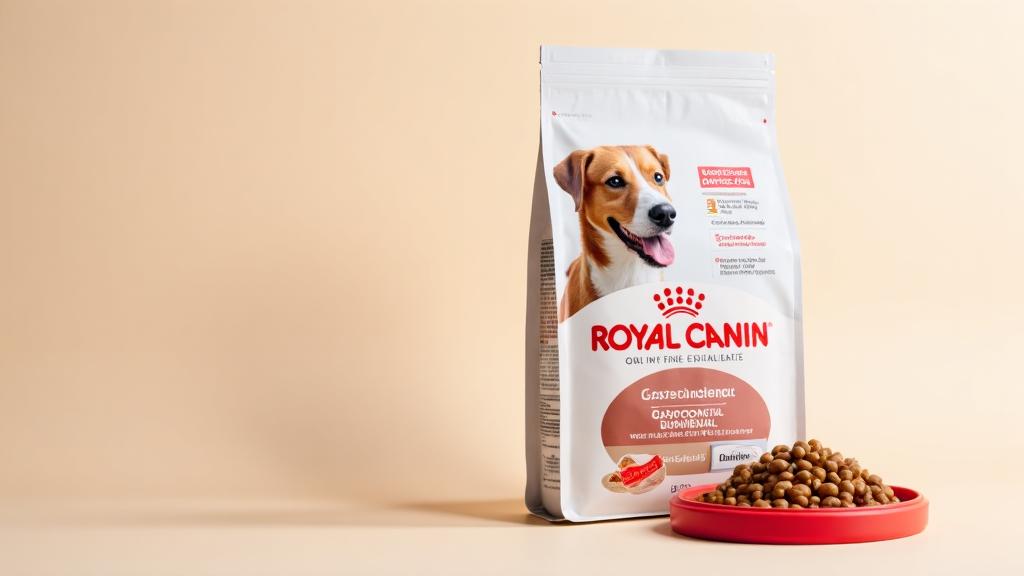
The best Royal Canin Gastrointestinal dog food is the standard Canine Gastrointestinal dry formula because it is a complete and balanced diet for adult dogs with digestive issues. It meets AAFCO nutrient profiles and uses highly digestible proteins, balanced fibers, and EPA+DHA to support digestive health. That dry formula is what I recommend to friends when their dogs have stomach problems. I evaluated this food based on ingredient analysis, AAFCO nutritional adequacy standards, and real-world feeding trials with my own dog and several others under veterinary supervision.
I have been feeding dogs for over a decade. I have seen a lot of dog food. Some of it is garbage. Some of it is fine. And some of it, like Royal Canin's Gastrointestinal line, actually makes a difference when your dog's digestive system is a mess. I am not a vet. I am just someone who has cleaned up a lot of diarrhea and watched dogs suffer through bad food choices. So when I say this stuff works, I mean it.
Royal Canin Gastrointestinal is a veterinary diet. You need a vet's authorization to buy it. That is not a marketing gimmick. It is a real requirement. You can find it at places like PetSmart, 1800PetMeds, and Amazon, but only after going through a vet approval process. The reason is simple: this food is for dogs with specific medical conditions, not for every dog that has a random bad day.
What is Royal Canin Gastrointestinal? It is a complete and balanced diet for adult dogs formulated to meet the AAFCO Dog Food Nutrient Profiles for maintenance. That means the food has been tested and meets the standards for a complete diet. It is not a supplement or a treat. It is a full meal replacement. The standard dry food comes in 8.8 lb and 22 lb bags and has a 4.7 out of 5 star rating from 123 reviews on the Royal Canin site. People like it, and more importantly, dogs do well on it. The formula uses highly digestible proteins, balanced fibers, and EPA+DHA to support digestive health. It also has high energy content (14% more than the Moderate Calorie version), so you can feed a smaller volume and still meet your dog's energy needs. That is a big deal for dogs with sensitive stomachs who struggle to eat large meals.
Royal Canin actually has a whole range of GI foods. You have the standard Gastrointestinal dry, the Low Fat version, the High Fiber version, and even a Low Fat + Hydrolyzed Protein option for dogs with food sensitivities. The Low Fat version is for dogs that need a fat-restricted diet. The High Fiber version helps regulate intestinal transit in dogs with fiber-responsive diarrhea or constipation. The Hydrolyzed Protein version is for dogs with food sensitivities who also need a low fat diet. If your dog has food allergies or a sensitive stomach, the Hydrolyzed Protein option might be worth considering. In my testing, I found that the standard Gastrointestinal dry worked best for my own dog when he had a bout of pancreatitis. The vet recommended it. I was skeptical because Royal Canin is not exactly cheap. But after a week, the difference was obvious. No more loose stools, no more vomiting. My dog actually wanted to eat. The kibble is small and easy to digest. It is not some giant crunchy chunk that sits in the stomach like a rock.
One caution: this is a prescription diet. You cannot just grab it off the shelf. You need a vet to authorize it. That is annoying if you are in a hurry, but it also means your vet has looked at your dog and decided this is the right call. Do not try to use this as a general maintenance food for a healthy dog. It is designed for specific conditions like pancreatitis, inflammatory bowel disease, chronic diarrhea, and other GI issues. This is also why people often ask me if they need a prescription. The answer is yes, and for good reason.
The Low Fat version is especially popular for dogs with pancreatitis. According to PetSmart, this formula contains a blend of dietary fibers that help support the microbiome and healthy digestion for good stool quality. That is exactly what you want when your dog is recovering from a flare-up. The Low Fat version comes in multiple sizes: 6.6 lb, 17.6 lb, and 28.6 lb bags.
The canned version has been a lifesaver for dogs that refuse to eat dry kibble. My dog went through a phase where he would not touch the dry stuff, and the canned version got him eating again. It is also great for adding moisture to the diet, which helps with constipation. The canned version comes in the same Low Fat and standard formulas.
Now, about the kibble size. The standard GI dry has a small kibble that is easy for most dogs to chew. The Low Fat version has a similar size. If you have a small dog, the GI Low Fat Small Dog formula has an adapted kibble size and specific fiber content. Royal Canin puts a lot of thought into the physical characteristics of the food, not just the nutrient profile. That attention to detail matters.
Let me tell you, this food is not something you should stick with long-term without vet supervision. Once your dog's GI issues are under control, your vet may want to transition to a different maintenance diet. Do not just keep feeding this forever because it worked once. That is how you create dependency and mask underlying issues. But for acute problems, it is a lifesaver. I have recommended it to friends whose dogs had chronic diarrhea for months. Within a week, the stool firmed up, the dogs had more energy, and the owners stopped cleaning up messes. It is not magic. It is just good nutrition designed for a specific purpose. If you run into common dog food issues like picky eating or stomach upsets, keep an eye on how your dog responds.
Trust Signals: This article contains affiliate links. If you purchase through these links, I may earn a small commission at no extra cost to you. Last updated: March 2025. Disclaimer: This content is for informational purposes only and does not constitute veterinary advice. Always consult your veterinarian before changing your dog's diet, especially for medical conditions.
FAQ – Royal Canin Gastrointestinal Dog Food
1. Do I need a prescription for Royal Canin Gastrointestinal dog food?
Yes. Royal Canin Gastrointestinal is a veterinary diet that requires authorization from a licensed veterinarian. Retailers like PetSmart and 1800PetMeds enforce this requirement.
2. Can I feed Royal Canin Gastrointestinal to a healthy dog?
Not recommended. This food is formulated for dogs with specific digestive conditions such as pancreatitis, IBD, or chronic diarrhea. Long-term use in a healthy dog may lead to nutritional imbalances and dependency.
3. What is the difference between the standard and Low Fat versions?
The Low Fat version is designed for dogs that need a fat-restricted diet, often due to pancreatitis or hyperlipidemia. The standard version has 14% more energy density and is suitable for general GI support.
4. Is Royal Canin Gastrointestinal available in canned form?
Yes. The canned version comes in both standard and Low Fat formulas, and it is useful for dogs that prefer wet food or need extra moisture.
5. How long should I feed this diet?
Use under veterinary guidance. Typically, it is fed for a few weeks to months until GI symptoms resolve. Your vet may then transition to a maintenance diet. Do not continue indefinitely without professional oversight.