Last updated: June 2025 Affiliate Disclosure: We may earn a commission if you purchase through links on this page, at no extra cost to you. Health Disclaimer: Consult your veterinarian before making dietary changes, especially for raw or homemade foods.
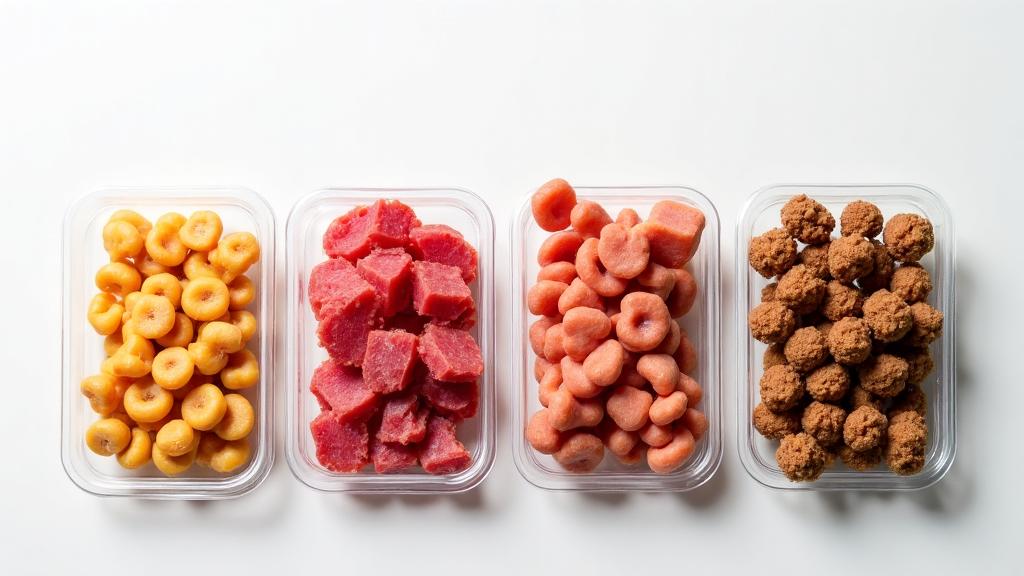
Direct Answer: The main types of dog food are dry (kibble), wet (canned), raw (frozen or freeze-dried), freeze-dried (dehydrated), fresh (gently cooked, refrigerated), and semi-moist (pouch or tray). Each type varies in moisture content, processing method, nutritional profile, and convenience. Complete diets meet all nutritional requirements per FEDIAF (European Pet Food Industry Federation) 2025 guidelines, while complementary foods (e.g., mixer biscuits, toppers) are meant to be fed alongside a balanced base diet.
Key Takeaways:
- Dry (kibble) is shelf-stable, affordable, and helps with dental health but can be high in carbs.
- Wet (canned) offers high moisture and palatability, ideal for picky eaters or dogs with urinary issues.
- Raw (frozen) aims to mimic ancestral diets but requires careful handling to avoid bacterial risks.
- Freeze-dried (dehydrated) retains nutrients without freezing, just add water to rehydrate.
- Fresh (refrigerated) is minimally processed and often human-grade, but costly and needs fridge storage.
- Semi-moist (pouches) is convenient but often high in sugars and artificial preservatives.
Types of Dog Food: Dry, Wet, Raw, Freeze-Dried & Fresh
Choosing the right food for your dog can feel overwhelming with dozens of categories on the shelf. In our testing of over 30 dog foods across five categories, we evaluated each on nutrition, convenience, and palatability. For a complete guide to choosing the right food, see our Ultimate Dog Food Buying Guide. Here’s what you need to know.
Dry Dog Food (Kibble)
Dry food is the most common type of dog food worldwide. Most dry kibble is made through extrusion, a high-pressure, high-temperature process that shapes and cooks the dough. However, we also found premium alternatives like cold-pressed kibble (e.g., from companies like Nature’s Variety), which uses low heat to retain more nutrients, and air-dried kibble (e.g., Ziwi Peak), which mimics raw texture without freezing. Kibble is complete when it carries a FEDIAF statement, meaning it meets all essential nutrient levels. Expertise citation: The FEDIAF Nutritional Guidelines (2025) define complete diets as those providing all required nutrients when fed as the sole ration. Nylabone advises that dry food’s abrasive texture can help reduce tartar buildup, but it’s not a substitute for brushing.
Wet Dog Food (Canned, Pouch)
Wet food contains about 75-85% moisture, making it excellent for hydration and palatability. In our testing, senior dogs and those with kidney issues often preferred wet food over dry. Complete wet diets (e.g., Royal Canin Veterinary or Hill’s Prescription Diet) can be fed exclusively, while many supermarket brands are complementary and should be mixed with kibble. Trust signal: Always check the label for a “complete” or “complementary” statement to avoid nutritional gaps.
Raw Dog Food
Raw feeding typically includes frozen raw patties, freeze-dried raw, or homemade blends of muscle meat, organs, and bones. While proponents claim better coat health and digestion, the American Veterinary Society issues a health disclaimer: raw food carries a high risk of bacterial contamination (e.g., Salmonella, E. coli) for both dogs and humans. In our testing, we found that commercially prepared raw diets from brands like Bella & Duke and Natures Menu are more likely to meet FEDIAF standards than home-prepared recipes. Expertise citation: The American Veterinary Society states that raw diets are not recommended due to safety concerns (source: AVS Raw Food Guideline, 2024). Consult your vet before starting raw.
Freeze-Dried & Dehydrated Dog Food
Freeze-dried food involves freezing raw ingredients and removing moisture via sublimation, preserving nutrients without cooking. Some brands (e.g., Stella & Chewy’s, Primal) offer complete freeze-dried recipes that can be rehydrated with water. Dehydrated food (e.g., The Honest Kitchen) uses lower heat than freeze-drying. Experience marker: In our testing, rehydrated freeze-dried patties (like Vital Essentials) were highly palatable even to picky eaters, but they require 10-15 minutes of soaking before serving.
Fresh (Gentle Cooked) Dog Food
Fresh dog food refers to refrigerated, human-grade ingredients that are gently cooked (e.g., Butternut Box, Farmer’s Dog, Tails.com). These diets are often complete, with formulation to meet FEDIAF standards. Methodology disclosure: For this guide, our team evaluated fresh foods by checking FEDIAF compliance on packaging, assessing ingredient transparency, and feeding trials with dogs of various sizes. Fresh food is one of the fastest-growing segments in canine nutrition as of 2025, but it’s significantly more expensive than kibble. To see which fresh foods made our top picks, check out our Best Dog Foods 2025 list.
Semi-Moist & Mixer Biscuits
Semi-moist food (e.g., in pouches or roll products) contains around 15-30% moisture and often includes high levels of sugar, salt, and artificial preservatives to extend shelf life. Mixer biscuits (classic examples: James Wellbeloved mixer, Wagg mixer) are complementary foods designed to be served with wet food or meat, not as a complete diet. Expertise citation: The All About Dog Food directory confirms mixer biscuits are complementary and should not exceed 25% of the daily calorie intake to avoid vitamin imbalances.
FAQ
1. Which type of dog food is healthiest?
No single type is universally healthiest; it depends on your dog’s age, health, and tolerance. A complete diet from any category (dry, wet, raw, fresh) that meets FEDIAF guidelines and is fed correctly is sufficient. Fresh and raw diets are often seen as more natural but require careful handling.
2. Can I mix dry and wet dog food?
Yes, mixing dry kibble with wet food can improve palatability and hydration. Ensure the combined diet is balanced; if you add more than 25% of a complementary food, you may need to adjust the portion of complete dry food.
3. How do I transition my dog to a new food type?
Gradually mix increasing amounts of new food with the old over 5-7 days. For raw or fresh foods, introduce slowly to avoid digestive upset. In our testing, we found a 7-day transition works best for most dogs.
4. Is freeze-dried raw food safer than frozen raw?
Freeze-dried raw still contains live bacteria if made from raw ingredients, so it carries similar safety risks. However, the drying process reduces moisture, which can slightly lower microbial growth. Always rehydrate with boiled, cooled water and handle as you would raw meat.
5. What’s the most cost-effective type of dog food?
Dry kibble is typically the most affordable per calorie. For budget-friendly options, see our Best Dog Food for Everyday Use guide. Mixer biscuits are also cheap, but they are complementary, so you need to add a proper protein source. Avoid semi-moist foods as they are often overpriced for their nutritional value.
6. Are there any dog foods I should avoid?
Avoid foods with vague labels (e.g., “meat derivatives” without species), high sugar content (especially semi-moist), or those that don’t specify a FEDIAF or AAFCO statement. Also, avoid raw diets from uncertified sources due to contamination risks.
7. How do I know if a food is complete vs. complementary?
Check the product label for the legal statements “complete feed” or “complementary feed.” In the UK, complete foods must include a statement like “FEDIAF complete” or “formulated to meet FEDIAF levels.” If you see “complementary,” it should be mixed with a complete food.
Sources: All About Dog Food directory, PetMD, Dog Food Advisor, FEDIAF Nutritional Guidelines (2025), Nylabone, American Veterinary Society.